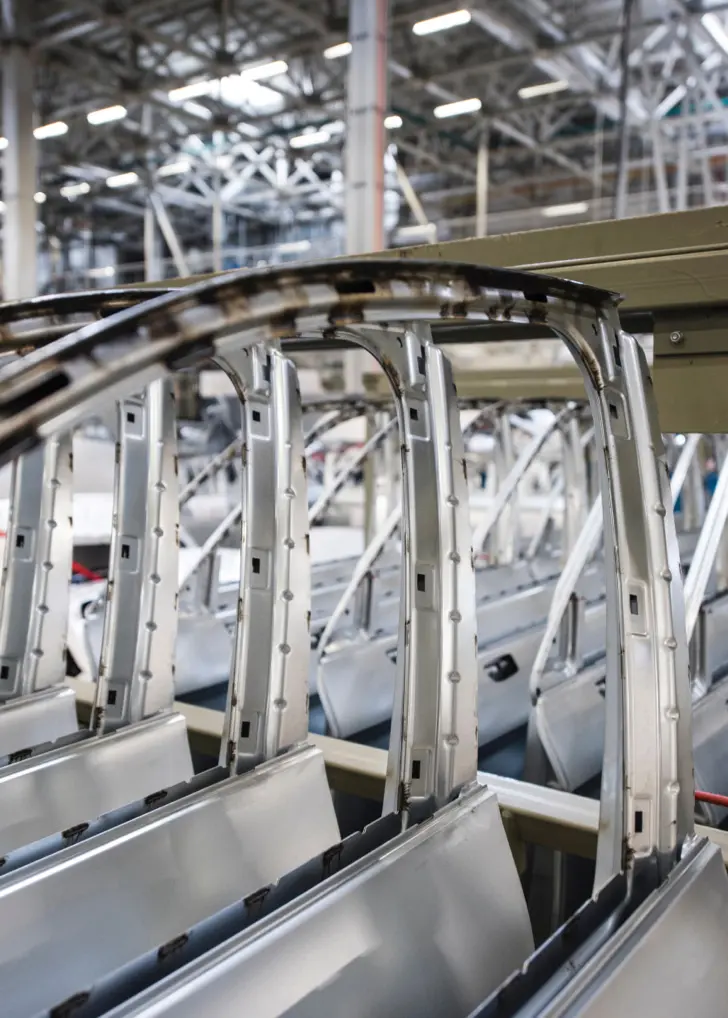
At Refacture, we employ advanced vitrification techniques to convert industrial byproducts into stable, high-performance glass matrices. This process not only neutralizes hazardous components but also repurposes waste into valuable feedstock for various industrial applications.
The Vitrification Process
Vitrification involves heating feedstock materials to high temperatures, transforming them into a molten state, and then rapidly cooling them to form a non-crystalline, amorphous solid—essentially, glass. This process immobilizes contaminants and produces a durable, leach-resistant material suitable for various industrial uses.
Advancing Sustainable Materials
Our commitment to innovation drives us to refine vitrification techniques that not only address waste management challenges but also contribute to the circular economy. By transforming waste into valuable materials, we reduce environmental impact and support sustainable industrial practices.
The resulting glass matrices can be engineered for various applications, including construction materials and industrial feedstcks.
Waste Reduction
By converting waste into valuable products, vitrification significantly reduces landfill usage and promotes resource efficincy.
Vitrification at Scale Requires a Smarter Footprint
Turning feedstock into strategic materials is only part of the challenge. Refacture’s modular factory approach ensures these processes can be deployed where they’re needed most—efficiently, quickly, and at the right scale.